How Marketing Sold You Styles You Didn’t Ask For
For most of tattoo history, styles did not behave like products.
They behaved like slow cultural mutations. They formed inside specific shops, were carried by specific artists, and changed as they moved through geography and apprenticeship. What counted as good work in one place was not identical to another, but the disagreements still operated inside the same craft logic: limited tools, local reputation, and a shared understanding that tattoos had to survive on skin, not on paper.
That system produced variation, but it also produced constraint. And constraint is what keeps a craft coherent.
Over the last twenty-five years, those constraints were not removed. They were replaced by systems that all began optimizing the same variable: visibility.
The result is an industry that still thinks it is choosing styles, while it is actually responding to incentives.
─────────
BEFORE REALISM BECAME THE DEFAULT LANGUAGE
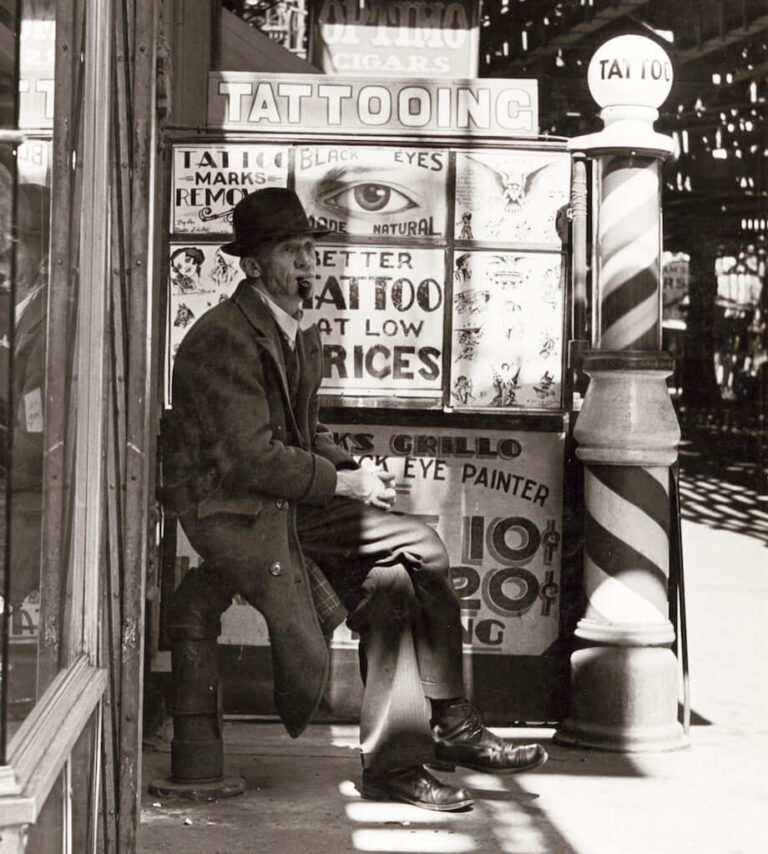
In the 1990s, tattooing was structurally generalist.
Street shops ran on walk-ins, flash, and volume. Artists were expected to handle anything that came through the door. The hierarchy of skill was based on range under pressure, not specialization under control.
Realism existed, but it was unstable. It required drawing ability, patience, and technical consistency that were not evenly distributed across the field. It was not a category. It was a difficult outcome.
That distinction matters.
Because styles do not become dominant when they exist.
They become dominant when they become reproducible.
─────────
TECHNOLOGY DID NOT ADD REALISM. IT REMOVED FRICTION.
The shift that actually mattered was not aesthetic. It was mechanical.
Rotary machines reduced variability. Cartridge systems reduced setup time. Power supplies became stable enough that long sessions stopped being unpredictable. Needle configurations became modular instead of handcrafted.
Each step removed friction from execution.
Friction is not neutral in tattooing. It filters what is possible.
Once enough friction is removed, certain outputs stop being exceptional and start becoming repeatable.
Realism was one of them.
─────────
WHEN MACHINE COMPANIES ENTERED THE CULTURE SYSTEM
At some point, machine manufacturers stopped behaving like passive tool suppliers.
Companies such as Cheyenne, FK Irons, Bishop and others did not just produce equipment. They began producing narratives around what that equipment was for.
Sponsored artists became central to marketing. Convention presence became performance. Educational content became brand infrastructure. Machines were no longer just evaluated by function, but by association.
This is where the system shifts.
Because once a tool is consistently represented through a specific type of output, that output begins to function as implied proof of the tool’s value.
Realism became that output.
Not because companies explicitly pushed it as the only valid style, but because it was the most legible way to signal control, precision, and technical capability at scale.
You can sell precision through realism.
You cannot sell restraint in the same way.
─────────
THE INTERNET MADE EVERYTHING COMPARABLE
Before the internet, tattooing was local competition.
After it, everything became comparable to everything else.
This flattened context. Styles stopped existing inside their local logic and started existing inside a global feed of comparison.
In that environment, styles that communicate instantly gain structural advantage.
Realism does not require translation. It does not require cultural literacy. It does not require understanding composition systems.
It communicates immediately as effort.
That is enough in a comparison-driven system.
─────────
INSTAGRAM DID NOT CREATE REALISM. IT FILTERED EVERYTHING ELSE.
By the time Instagram became the dominant portfolio space for tattooing, realism was already established. The platform did not invent it. It selected for it.
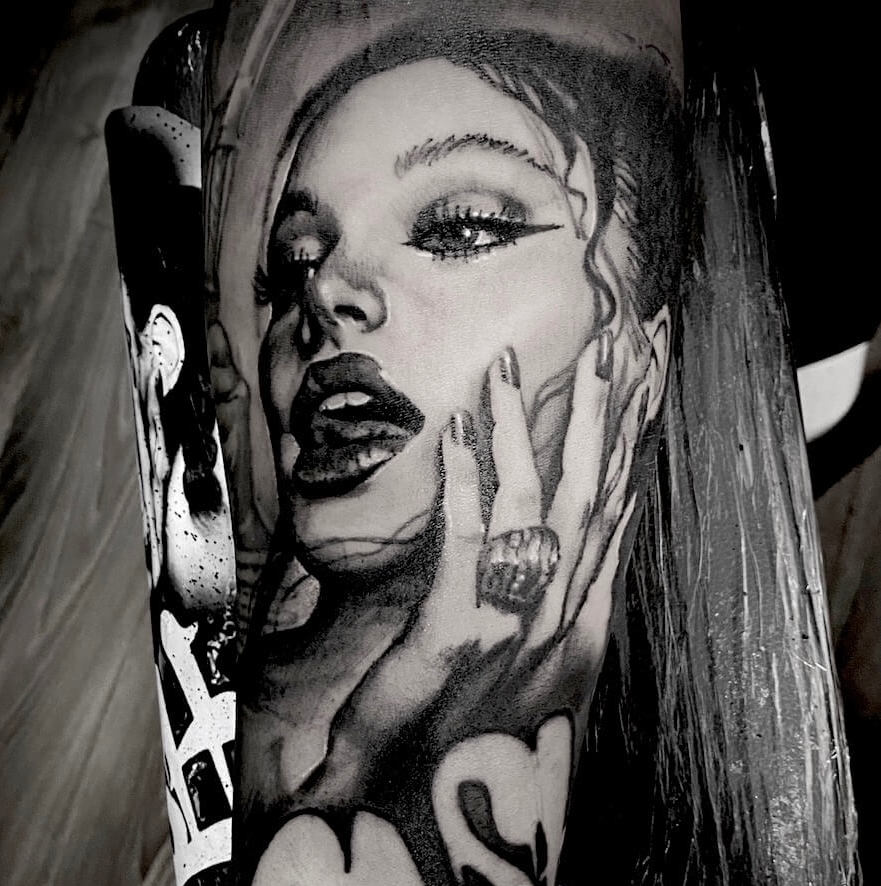
High contrast, dense detail, recognizable subjects and immediate readability perform well in a feed optimized for split-second decisions.
A realistic portrait or animal reads as technical proof instantly. It requires no interpretation.
More structural or restrained styles depend on time, context, and often healed work to be fully understood. Those are not weaknesses in tattooing. They are weaknesses in an attention system.
At the same time, evaluation shifted.
For most of tattoo history, quality was validated through time. Healing was part of the argument.
Social media compressed that timeline.
The industry adapted to what could be seen, not what could be verified.
─────────
WHEN STYLE STOPPED BEING STYLE AND STARTED BEING CONTENT
At some point, tattooing stopped competing only within its own category.
It began competing inside a general attention economy.
Craft requires durability. Content requires immediacy.
Those systems overlap only partially.
Once visibility became measurable, the industry reorganized around it. Manufacturers showcased what photographed well. Artists optimized portfolios for engagement. Conventions rewarded immediate impact. Education followed what could be easily demonstrated.
No coordination was required.
No coordination was needed.
─────────
DETAIL BECAME A SUBSTITUTE FOR UNDERSTANDING
Detail is easy to recognize. Understanding is not.
A viewer can see hair, pores, gradients, transitions, micro-textures. They cannot easily evaluate composition, structure, placement, or long-term readability.
As a result, detail gradually became a proxy for quality.
The more information a tattoo contained, the more convincing it appeared.
Complexity became evidence of skill. Simplicity started to look like absence of effort.
Most durable tattoo traditions operate in the opposite direction. They reduce information to preserve clarity over time.
Reduction was never a limitation.
It was a discipline.
─────────
WHAT GOT DEVALUED WITHOUT BEING REPLACED
As realism became dominant, other decision frameworks lost visibility.
Simplicity began to look basic. Boldness began to look easy. Restraint began to look like underdevelopment rather than control.
Restraint does not scale well in an attention system. It is harder to compare, harder to rank, harder to share.
Over time, what is visible becomes what is valuable.
Not because it is correct.
Because it is repeated.
─────────
THE STRUCTURE BEHIND TASTE
Marketing in tattooing rarely operates through direct persuasion.
It operates through amplification.
Machine companies, educators, conventions, sponsors and platforms all participate in the same visibility economy. Each rewards different outputs, but when incentives align, they converge.
Realism is the result of that convergence.
Not a decision.
A selection outcome across multiple systems.
Once that happens, it stops looking like preference.
It starts looking like default.
─────────
THE STYLES YOU DID NOT DIRECTLY CHOOSE
Clients rarely choose styles in isolation.
They choose from a narrow range of what has been made visible as “good tattooing” at a given moment.
That range is shaped by technology, marketing, platforms, sponsorship structures and recent industry incentives.
A generation of clients learned to evaluate tattoos like screens: resolution, density, realism, detail.
Skin was never designed to operate under those criteria.
Realism did not become dominant because it was requested.
It became dominant because it aligned with every system that defines visibility in modern tattooing.
That alignment is the story.
Not taste.
Structure.
And structure does not announce itself while forming.
Only after.
─────────
FINAL POSITION
Realism did not win because it was better.
It won because it was measurable inside a system built on visibility, comparison and speed.
And anything consistently measurable inside that system becomes dominant.
Once tattoos became public instead of personal, they started following trends instead of intent.
Not through agreement.
Through repetition.
One machine.
One cartridge.
One sponsored artist.
One convention trophy.
One Instagram post at a time.
─────────
Alley Cat Tattoo – Bucharest, 2026
[END]