Street Shops vs. Studio Culture
Street Shops vs. Studio Culture: The Split That Never Healed
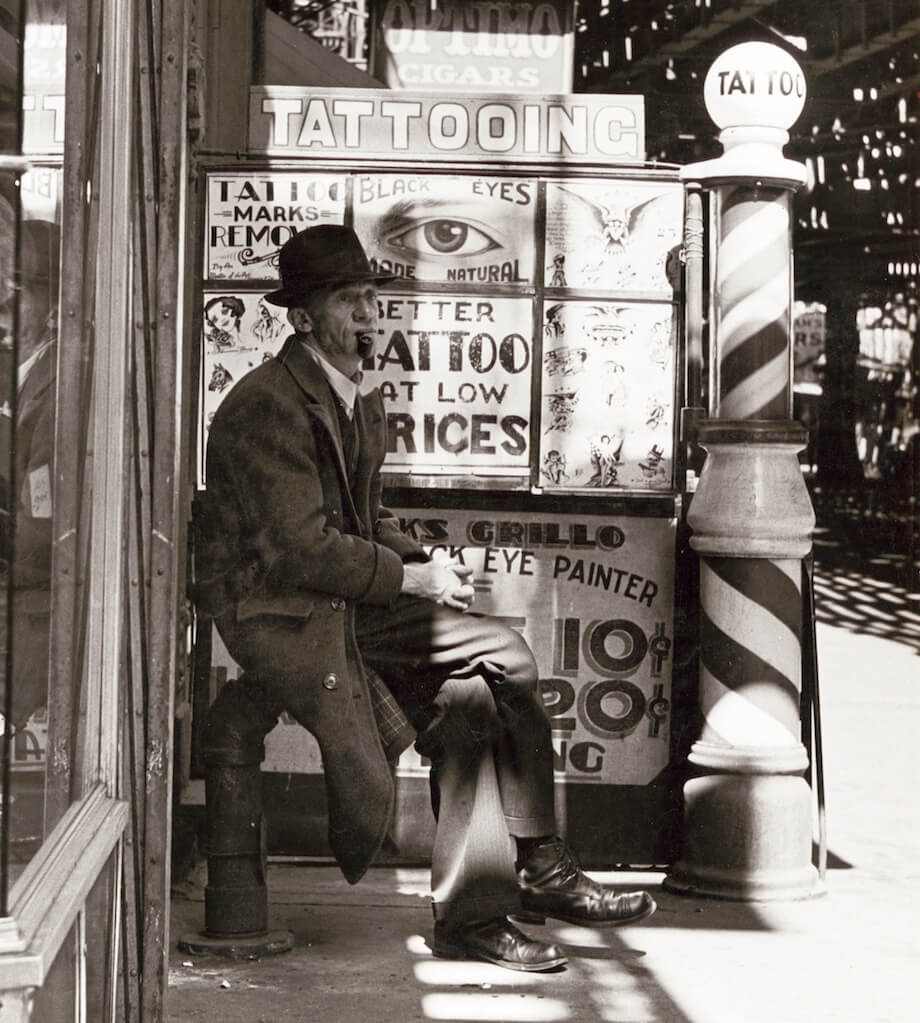
Walk into an old street shop and you’ll hear the same story.
Tattooing got soft.
Walk into a modern private studio and you’ll hear another one.
Tattooing evolved.
Neither is entirely wrong. But only one of them still has to deal with walk-ins at 6 PM on a Friday when someone wants a cover-up over a name they no longer want to explain.
The split between street shops and studio culture was never really about quality, professionalism, or even art. It was about how the job is actually lived. About what kind of conditions you work under, and what kind of tattooer those conditions produce.
Three decades later, the argument is still running. Not because anyone is winning, but because both sides stopped describing the same reality a long time ago.
─────────
THE ORIGIN STORY NO ONE AGREES ON
The shift didn’t happen cleanly.
It started in the early nineties, when tattooing began moving out of subculture and into something closer to mainstream visibility. The shops stayed the same on the surface: flash on the walls, walk-ins, volume, repetition. But underneath, the structure started changing.
A small number of tattooers discovered they could control who they worked with.
Not by closing the door, but by making it harder to enter. Appointment-only. Consultations. No walk-ins. A phone number instead of a storefront rhythm. The client who arrived through that system was already filtered. They had time to think. They had intent.
That changed the work.
Longer sessions. Larger pieces. Higher rates. Fewer interruptions. And, most importantly, the possibility of building a consistent visual identity instead of reacting to whatever walked in.
The studio model wasn’t designed in advance. It emerged from accumulated decisions made across thousands of shops over years. A gradual separation, not a revolution.
And once it started, it didn’t reverse.
─────────
THE ECONOMICS UNDERNEATH EVERYTHING
Most of the cultural arguments arrived after the economic shift, not before it.
Street shops are built on throughput. More clients. More tattoos. More transactions. The logic is simple: survival comes from volume.
Studio culture is built on scarcity. Fewer clients. Larger projects. Higher rates. More control over conditions.
Neither model is moral. Both are structural.
And over time, each develops its own language to justify itself. “Real tattooing.” “Elevated work.” “Keeping it raw.” “Pushing boundaries.” Most of it is post-rationalization layered over business logic.
Tattooing didn’t split because of ideology.
It split because it became financially possible to work in more than one way.
─────────
THE APPRENTICESHIP DIVIDE
Street shop apprenticeships were built on exposure.
You learned by being inside it. Clean the station. Watch. Fill in. Do small tattoos. Then bigger ones. Then everything that walked through the door, ready or not.
The range was the education. You didn’t specialize. You adapted.
Over time, that produces a specific kind of tattooer. Fast. Flexible. Capable under pressure. But not always shaped by a coherent direction.
Studio culture produces something different. More controlled apprenticeships. More selective work. Longer development of a specific visual language under a specific mentor.
The result is coherence. Identity. Consistency.
But also a narrower kind of experience.
The uncomfortable reality sits between the two: adaptability can drift into lack of direction, and specialization can drift into fragility.
─────────
FLASH VS CUSTOM: THE LOSS OF A SHARED LANGUAGE
Flash didn’t just make tattooing faster.
It made tattooing shared.
The same designs existed in different cities, different countries, different decades. Anchors. Swallows. Roses. Skulls. Not as copies, but as a common visual vocabulary that connected people working in completely different conditions.
Custom work replaced that with individual authorship.
The technical ceiling rose dramatically. Complexity increased. Precision increased. But the shared reference points fractured.
Now the language belongs to the artist, not the craft.
Which means something subtle disappeared: the ability to assume that another tattooer would recognize the same baseline of forms, constraints, and decisions.
─────────
THE INSTAGRAM SHIFT
In a street shop, reputation is slow and local.
It is built on healed skin, not photographs. One client tells another. One mistake travels further than a good image.
In studio culture, reputation is compressed into images.
And images do not behave like tattoos.
Lighting, timing, composition, healing stage — all of it affects perception. The algorithm does not distinguish between a tattoo that lasts and a tattoo that photographs well.
Over time, this produces a predictable drift. Certain decisions begin to prioritize visibility over longevity. Fine lines that look precise on day one. Gradients that read beautifully in photos but soften quickly in skin. Designs optimized for the feed before the body.
The cost is not always visible at the moment of publication.
The client carries it later.
─────────
WHAT STREET SHOPS FORCE YOU TO LEARN
Street shop tattooing removes control.
You don’t choose the day. You don’t choose the client. You don’t choose the problem.
A cover-up at the end of a long day is not a conceptual exercise. It is a constraint under pressure.
This environment produces competence that is difficult to simulate elsewhere. Not necessarily refinement, but resilience.
And over time, resilience becomes a kind of skill that is hard to translate into curated environments.
It also comes with limits. Constant reaction leaves less room for consolidation. For defining a voice. For slowing down long enough to refine decisions that aren’t dictated by urgency.
─────────
WHAT STUDIO CULTURE REMOVES
Studio culture removes friction.
That is its advantage and its blind spot.
It allows consistency. Planning. Precision. It creates space for longer thinking and cleaner execution.
But it also removes a category of failure that is part of the craft: the kind that only appears when conditions are not ideal.
Some of the most important tattooing skills are not visible in controlled environments. They appear when something breaks. When the skin is difficult. When the client is uncertain. When time collapses.
A system that filters those situations out will not develop them.
─────────
WHAT ACTUALLY DIED
There is no longer a default tattooer.
There is no shared apprenticeship path. No universal baseline of experience. No assumption that two tattooers have passed through the same set of constraints before diverging into style.
Some artists have never worked a walk-in. Never handled a difficult repair. Never been forced to finish something they didn’t design.
Others have never had the conditions to build a coherent body of work outside of interruption.
Both exist. Both are legitimate within their systems. But they are no longer trained by the same reality.
The industry still uses one word for both.
But the underlying training no longer matches.
─────────
THE SPLIT THAT NEVER HEALED
The split between street shops and studio culture was never temporary.
It wasn’t a disagreement to be resolved. It was a divergence created by different constraints, different economics, and different definitions of what it means to progress in the craft.
The mistake was assuming they still shared a foundation.
They don’t.
Same machines.
Same ink.
Different working realities.
Different expectations.
Different outcomes.
At a certain point, calling it one profession requires ignoring too much of what the profession has become.
Not because one side replaced the other.
But because both evolved in parallel long enough that the overlap stopped being structural.
The Split That Never Healed
Alley Cat Tattoo – Bucharest, 2026
[END]