
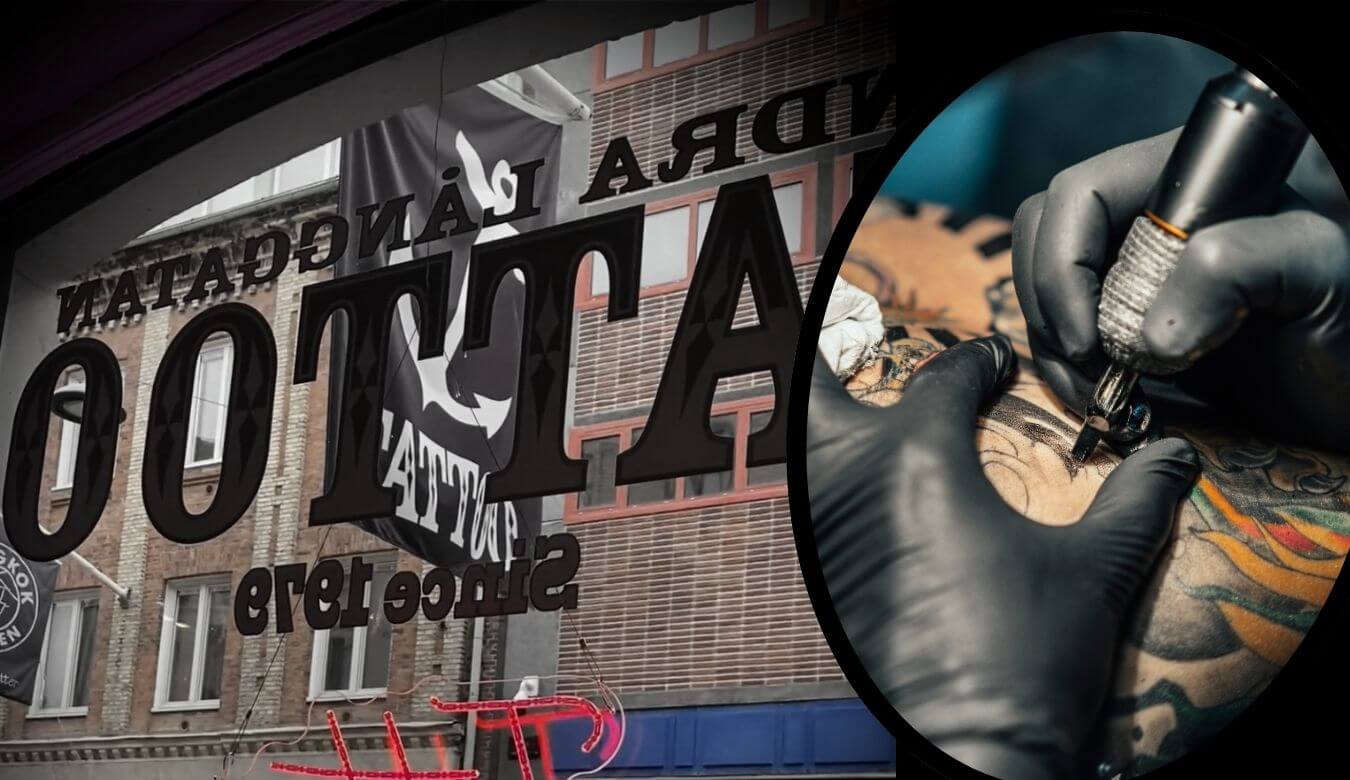
2nd Long
Ten years ago, I was running my own private setup.
Appointments only. Realism focus. Three to five hours per session, controlled conditions, clients I’d vetted through consultations.
Before that I’d spent years working my way through studios, trying to evolve.
I thought I had tattooing figured out.
Then I landed on Andra Långgatan in Gothenburg, and that street ripped that illusion apart in seventy-two hours.
─────────
Peter Schmidt saw my work online and asked if I wanted to guest at his shop.
I’d done a short stint in Denmark before that – enough to know I needed to push past my comfort zone if I wanted to get better.
So I booked a trip for two weeks. Maybe three.
Scheduled a few appointments to cover costs. The rest of the calendar sat empty, which made me nervous.
“Don’t worry,” Peter said. “It’s a busy street. You’ll have work.”
Day one: I’m tattooing someone I met ten minutes ago. Design we’d barely discussed.
Halfway through, someone walks in asking to talk to me.
Then another.
My whole routine – the consultations, the second sessions two weeks out, the control I’d built around my process – didn’t exist here.
There was no time for “come back in two weeks.” The person in the chair had to leave satisfied, or they’d walk two streets away to another shop.
After two days I had gaps in my schedule.
“You should be up front,” Peter told me. “At reception. Talk to people when they come in. You never know what walks through the door.”
At first, I didn’t take that seriously, but that’s when it actually started.
─────────
THE STREET
First week: I worked more people than I’d worked in a month back home.
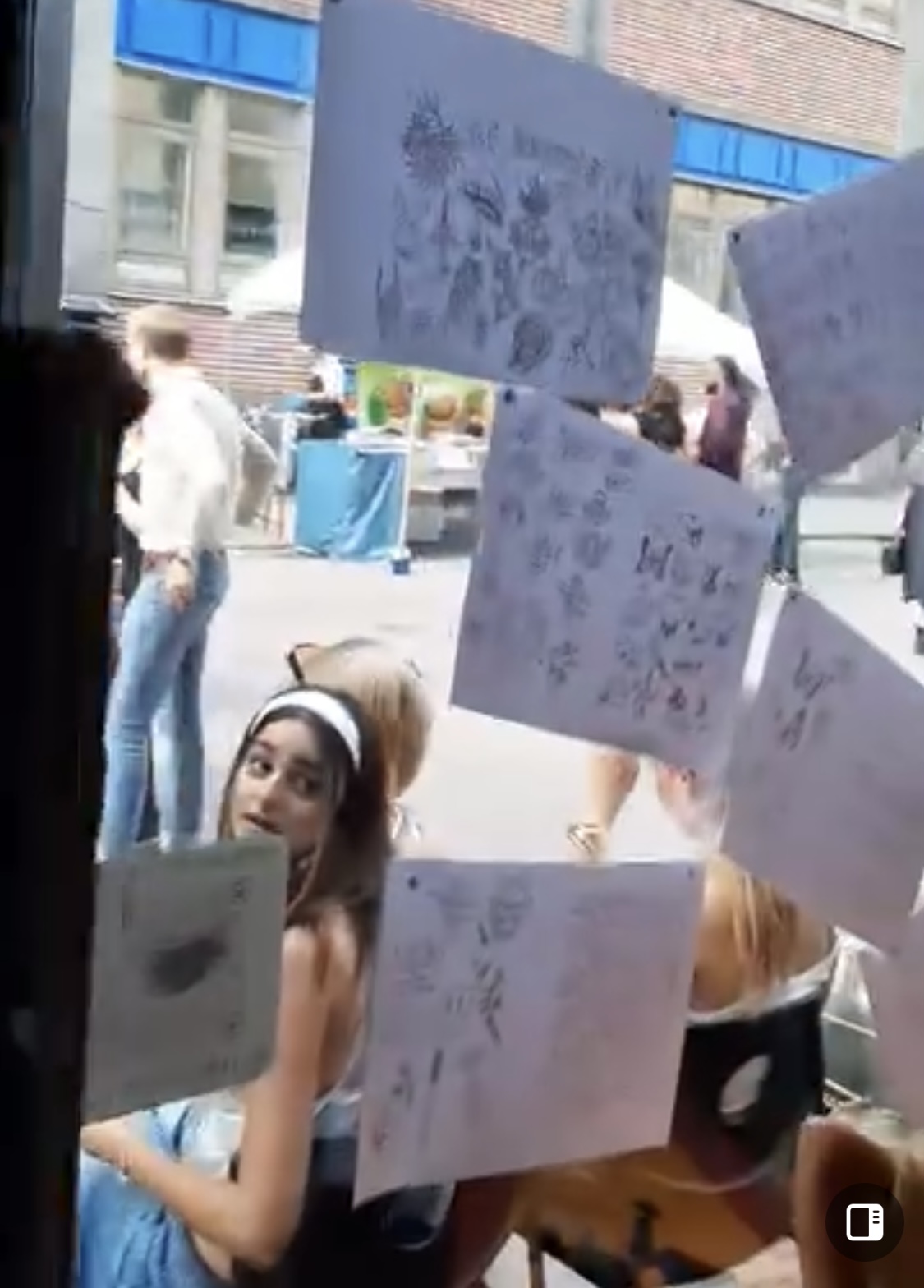
Three girls wanting matching tattoos.
Big Scandinavian guy asking about a sleeve.
Woman in her 60s getting her first tattoo.
A guy with the darkest skin I’d ever worked on, wanting a Biggie portrait on his thigh.
And it kept going.
“Can you cover this?”
“What’s your wait time?”
“You have time this week?”
The phone rang constantly. “You take walk-ins today?”
I double-booked by accident multiple times. I’d tell one client to wait fifteen minutes while three more walked in expecting answers.
It was a different rhythm, and I didn’t know that language yet.
─────────
I was in a coastal city, in a country that has more sailboats than bicycles.
I stopped judging the nineteen-year-old kid wanting an anchor tattoo when I found out that two summers earlier, he’d crossed the Atlantic with two friends in a fourteen-foot sailboat, living on canned food and cases of beer.
I had clients in their twenties restoring historic ships, keeping centuries of nautical tradition alive with their hands.
I tattooed half the night shift at Volvo. I also tattooed guys who’d traded an Aston Martin for a ’69 Mustang and spent two years rebuilding it with the price difference.
The street taught me to shut up and listen before making assumptions.
─────────
Over lunch or after hours, Peter would fill in context I didn’t have.
Oscar Lagoni – an old Danish tattooer – had opened 2nd Long in 1979. Peter had taken it over from him years later. The street itself, Andra Långgatan, had a rough reputation back in the day. Bars, strip clubs, late nights. The kind of neighborhood where a tattoo shop made sense.
Oscar was well-known in his time. A lot of people in Gothenburg still remembered his name.
I met him a few times over the years. We never spoke much. Either he didn’t like speaking English or he wasn’t particularly warm to foreigners – especially ones from Eastern Europe.
Those first three weeks were a rollercoaster.
I was in the same city as artists breaking trends on social media. I met tattooers who’d been doing this twice as long as me.
I realized I was far from where I thought I was.
After a few more trips that year, Peter said, “You should move to Sweden. You could do good work in the shop.”
He used to say, “In this city, if we don’t have work, nobody else does.”
I wanted to understand what that meant. How much of the shop’s success was the street itself, and how much was the actual work – quality, consistency, genuine interaction with clients.
I wanted to know if I could fill my books when the street went quiet. If I was actually making it work or just riding the wave of a good location.
Peter brought me in because he thought I could deliver while staying hungry for more.
That I could keep one eye on the door while handling an appointment.
Or maybe it was simpler than that.
Maybe it takes a stray to recognize another stray.
The following spring, I moved to Sweden.
─────────
RESIDENT
In my first weeks as a resident, I filled my calendar two to three weeks out, leaving strategic gaps for walk-ins.
Slowly, the anxiety faded. I started controlling my schedule instead of being controlled by it.
Money was flowing. Things were good.
But gradually, I shifted toward walk-ins. I traded the safety of big planned projects for the diversity and cash flow of street work.
It showed in my portfolio. I stopped having time for photos. Some days I couldn’t remember what I’d tattooed or how many clients I’d seen.
The version of me that arrived in Gothenburg – realism specialist, portfolio curator, controlled process devotee – was falling apart.
But something else was being built underneath.
I learned to read clients in three minutes instead of three consultations.
I learned to execute clean work under pressure – with someone waiting, with the phone ringing, with my back already wrecked from six hours straight.
I learned that realism wasn’t enough. The street wanted blackwork, traditional, lettering, coverups, whatever walked through the door. So I learned those too.
I learned the difference between tattooing for a portfolio and tattooing for someone who’s going back to work Monday morning.
The street didn’t care about my aesthetic preferences.
It cared whether I could deliver.
And I learned to deliver.
─────────
ALL DAY LONG
But I didn’t know what was coming yet.
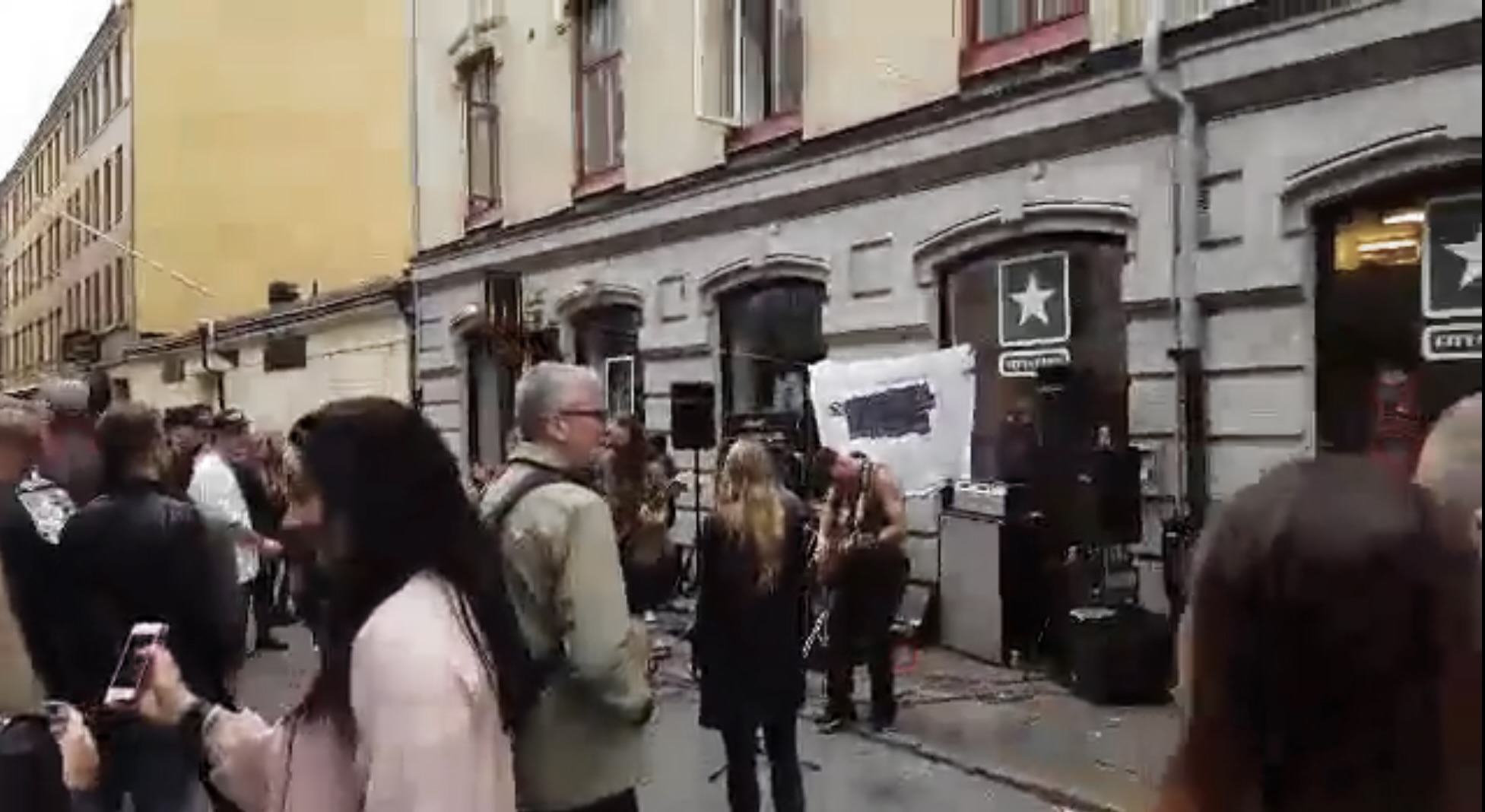
I’d heard about it – “All Day Long” – a street festival that happened once a year, last Saturday in May or first in June. Completely organic. No official organization. Just the street celebrating itself.
Whatever I thought I knew about working in a street shop was about to get recalibrated.
We’d open at 10 AM with eight or nine artists in the shop. The first hour was relatively calm – maybe one or two clients, or just me adjusting my energy and prepping machines. The street was still waking up. Food vendors setting up. Bands hauling in sound systems.
By noon, things started moving. Three or four clients in the next hour.
By 2 PM, we needed crowd control.
I’d take what I could handle. What I couldn’t, I’d pass to colleagues if they had bandwidth. By afternoon, the shop was chaos. Someone had to literally direct traffic: “You sit there. You go in. You come out. And you guys, shut up.”
The shop was packed. The street was a river of people – two, maybe three thousand that day.
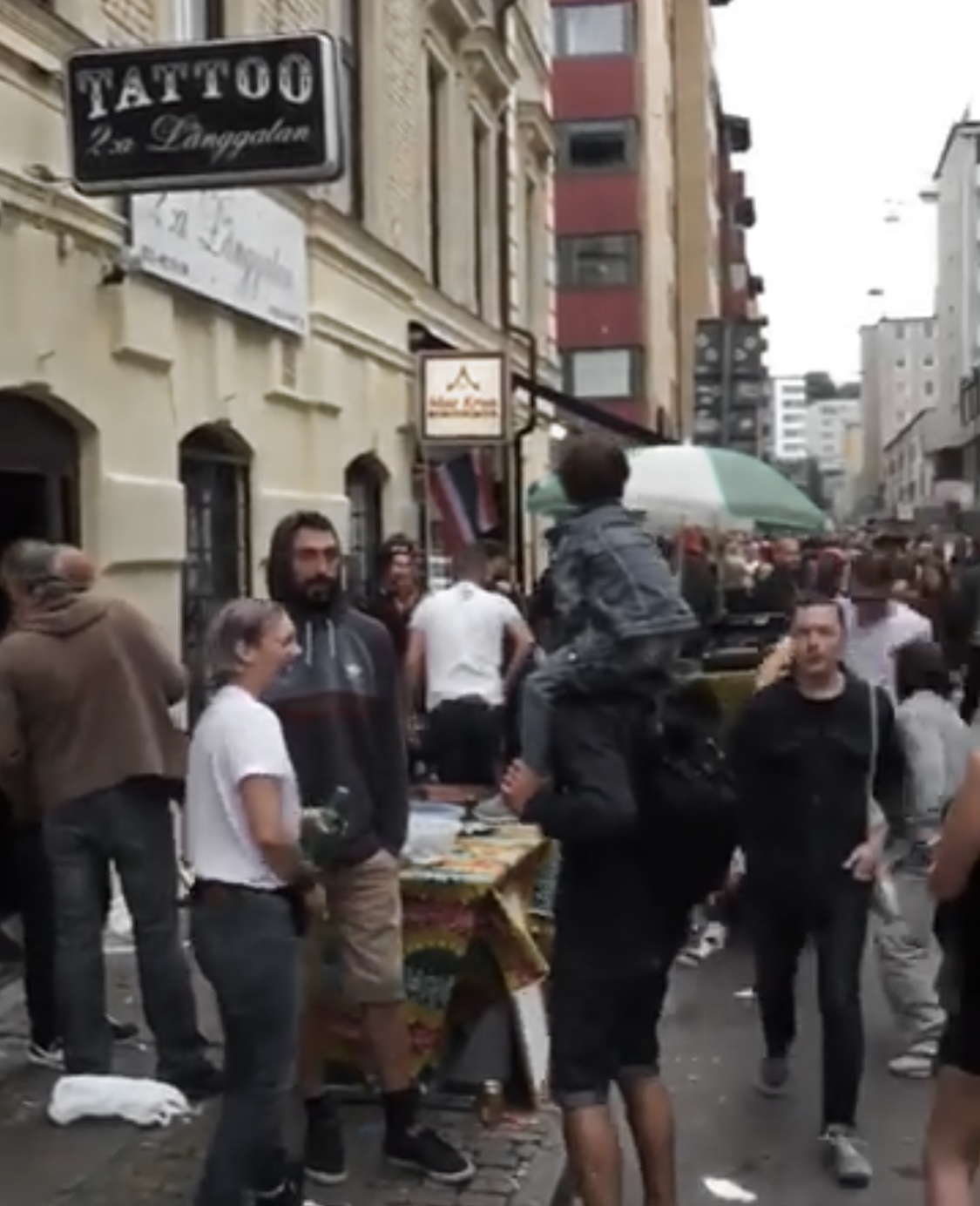
I couldn’t tell you how many people I tattooed. I stopped counting after eight.
The last “All Day Long” we did in 2024, we ran twelve hours straight, around the clock.
But that rhythm – you can only sustain once in a while.
For a long time, 2nd Long Day was the day you proved you could actually handle the street.
Or the day it proved you couldn’t.
─────────
THE ONES THAT LEFT
Magnus left first. He freed up my spot when I became resident, and he seemed almost relieved to go.
Two years later, others started leaving.
Some lasted six months. Some two years. Most didn’t make it past three.
Street shops consume you physically. Eight to ten-hour days, back-to-back clients, no time to recover between pieces. You can’t build a signature style when the street dictates what you tattoo that day.
The financial reality hits different too. You have to survive Gothenburg winters when walk-ins disappear and your expenses don’t.
And there’s always the temptation of private studios – better pay, curated clients, controlled schedule, clean portfolio.
I understood why they left.
I stayed anyway.
Not because I was better than them. Not because I loved the grind.
I stayed because the street was teaching me things I couldn’t learn anywhere else – things about resilience, about reading people, about what separates tattooers who can execute under pressure from those who need perfect conditions.
I stayed because leaving felt like failing a test I’d set for myself.
And somewhere around year four, I realized I’d become the kind of tattoer I wanted to be when I started – just not in the way I’d imagined.
Over ten years, everyone who worked in the shop when I started eventually left.
Some couldn’t handle it. Some reached a level where they felt done. Some chose their own path – and maybe I contributed to that.
Maybe I understood what Peter meant about the game of marbles: you throw one at somebody and see how it comes back. I might’ve learned the game and played it a bit differently.
Even the wave of artists who came after the originals eventually left.
I left too, eventually. Came back as a guest. Now there are different tattooers in the shop.
But I understood the mechanics by then.
─────────
THE PRICE
In ten years, I learned what a tattoo shop really is – not the curated Instagram version, the actual business of putting ink in skin for money.
I learned the difference between private studio culture and street shop culture.
One optimizes for portfolios. The other optimizes for survival.
I learned what’s real and what’s performance in this industry. How much bullshit hides behind artists with year-long waiting lists and “fully booked” social media posts.
I learned the traps of the rockstar fantasy – how many artists chase fame instead of skill and end up with neither.
I finally understood that cash is king. And why. How easy it is to confuse cash flow with success. How hard it is to save when you’re one slow month from trouble.
Ten years of street shop work costs more than people see.
Your back. Your hands. The way your mind changes. Even your emotions shift.
Relationships that couldn’t handle the person I became. Not because I changed for the worse – just because I changed in directions they didn’t recognize.
You realize your life revolves around the people in the shop. They understand you better than anyone outside it ever could.
The version of yourself that wanted creative freedom gets traded for the version that can execute under any condition.
I don’t regret it.
But I won’t pretend it was just “hard work.” It was a decade-long trade. Skills for everything else.
2nd Long gave me a lot. I tried to give something back.
I think that’s what kept me there for ten years.
I had the privilege of meeting extraordinary people. Tattooers I learned from.
Tattooers I measured myself against. Clients who became friends.
I understood the magic of the street – how it lifts you up and tears you down at the same time.
I still feel at home when I go back. I have clients who stop by just to show me a healed tattoo or say hello.
─────────
THE LINEAGE
Oscar passed away a few years ago.
I never really knew him. We met a handful of times over the years, never spoke much.
But I worked in the shop he built for ten years. I followed the rules, I’ve learned how to keep the standards.
Now I think I understand how he made that shop run. Why people would wait outside before he even opened the door.
Maybe that’s how lineage actually works – not through long conversations or formal apprenticeships, but through the space someone builds and the standards they set before you even arrive.
You inherit the structure. You prove whether you belong in it.
Oscar’s story connects to Tattoo Jack, to Copenhagen, to Nyhavn 37 in the 1940s.
But that’s a story for another time.
─────────
THE ALLEY CAT
I thought this year would close a chapter. Maybe even a career.
But I realized it’s just a new start.
The beginning of Alley Cat.
It’s not a pure street shop – I can’t be fully visible on a busy street in Bucharest the way 2nd Long was on Andra Långgatan. Different city, different realities.
But it operates on the same principles.
Walk-ins and custom work. Clients who know exactly what they want and clients who need help figuring it out. Clean work that has to survive real life, not just Instagram filters.
I’m building it with the community I’m forming – the people who understand what “make it last” actually means.
Andra Långgatan taught me how to survive when the terms aren’t yours.
Alley Cat exists because I know how to adapt those lessons to different streets, different cities, different rules.
Same principles. Different application.
Ten years was the education. It was a good run.
Now the cat goes back in the alley.
[END]
Alley Cat Tattoo – Bucharest, 2025
