
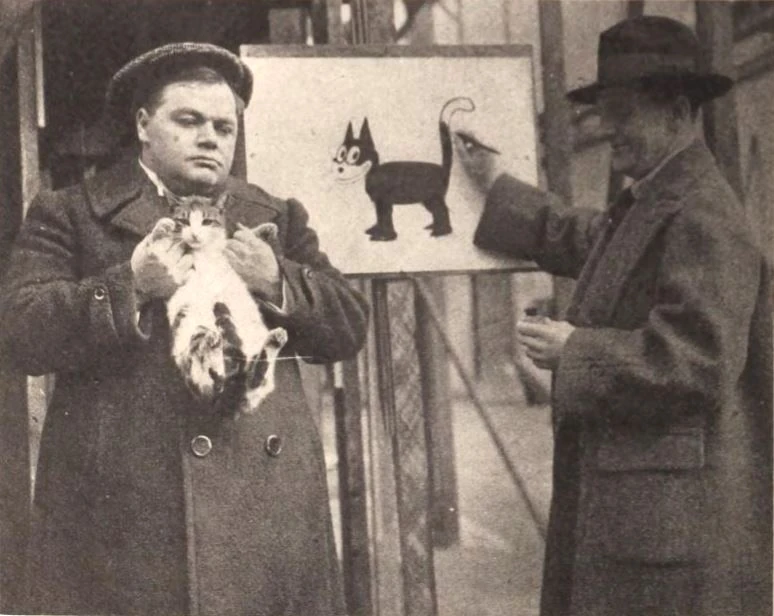
The Cat in The Alley
In 1919, a black cat walked out of a New York animation studio.
No name. No backstory. Just sharp lines, a grin, and the kind of nerve that doesn’t ask permission.
He prowled rooftops. He courted girls above his station. He won, he lost, and then he just walked off – tail detached and repurposed as a question mark, a cane, a weapon, whatever the moment required.
By 1923, the nameless stray had a name: Felix.
By 1925, he was more famous than Charlie Chaplin.
By 2025, he’s still here.
─────────
THE ORIGINAL: 1917 – THE PROTOTYPE BLEEDS
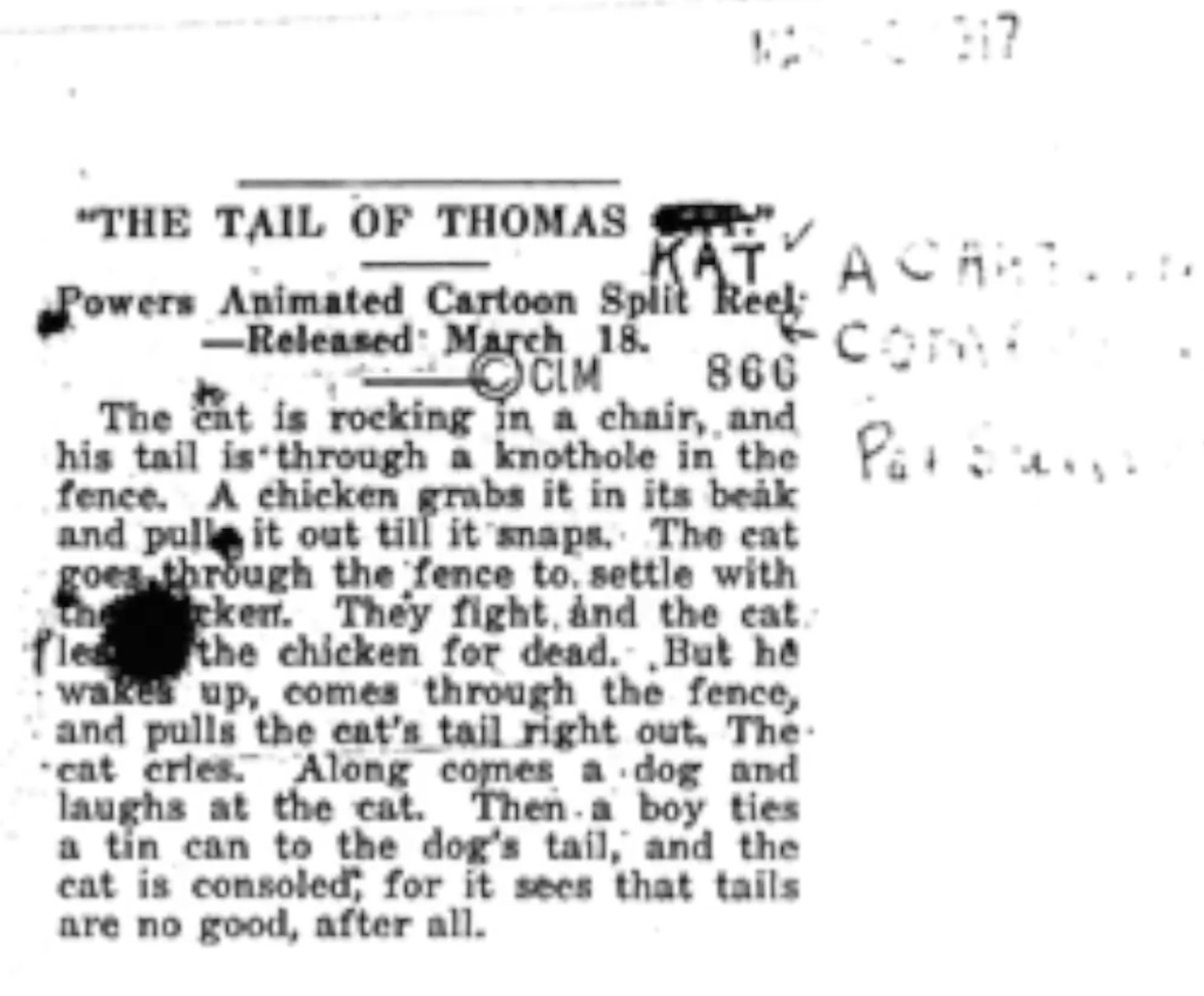
Two years before the nameless stray learned to grin for the camera, there was Thomas Kat.
March 1917. Pat Sullivan Studio. A lost short called The Tail of Thomas Kat.
No dialogue. No merch. No detachable gimmick. Just raw grit, cheap gin, and the kind of fight you don’t film twice.
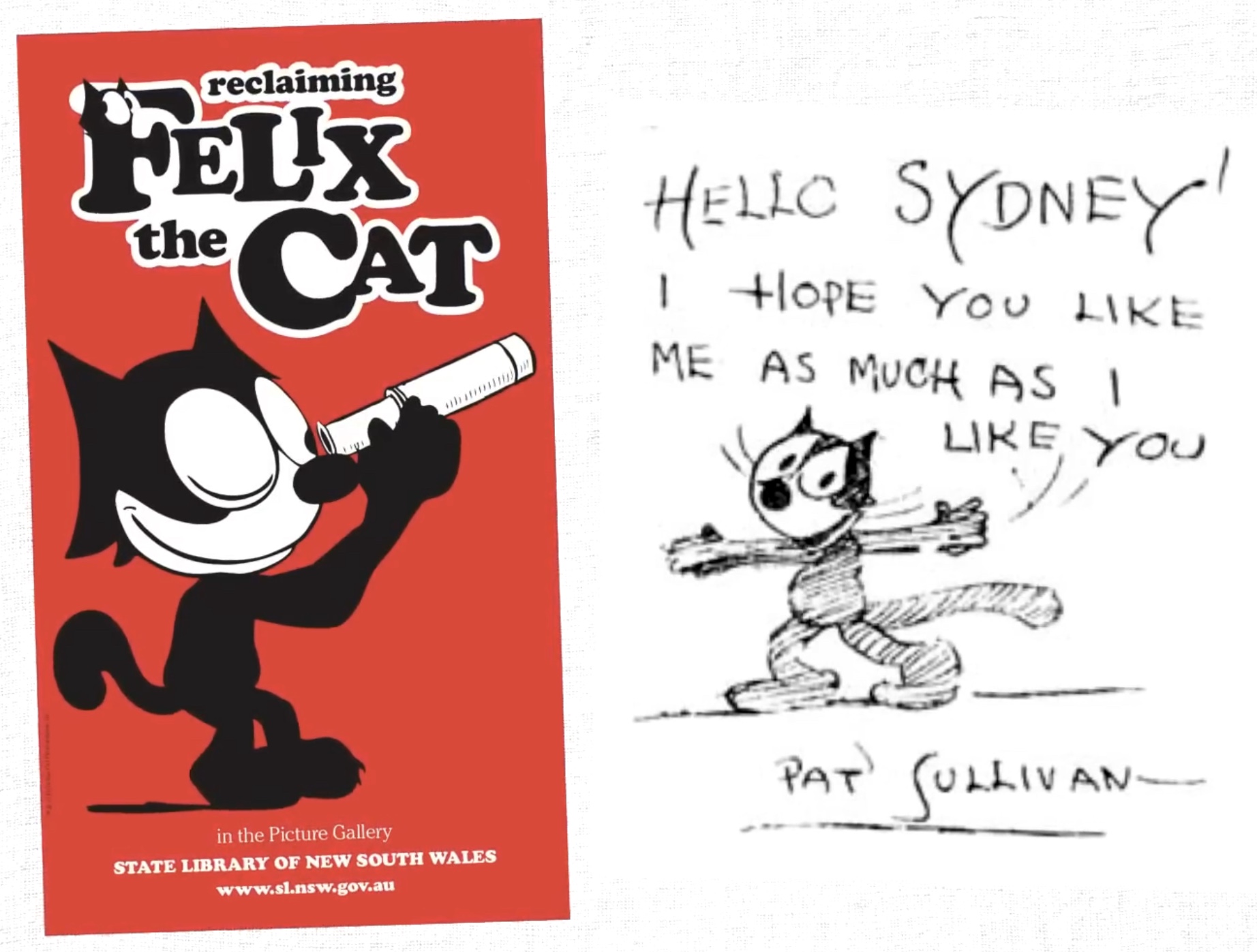
Sullivan sketched him rough: jagged lines, eyes like busted headlights. Same studio, same ink-stained fingers that would birth Felix. Australian docs in ’04, Sydney library show in ’05, they all nod: Thomas was the rehearsal. The alley cat before the alley cat had a brand. Before the tail became a toy, it was a liability. Before the grin, there was the snarl.
He didn’t get the doll. Didn’t get the TV test card. Didn’t get the TikTok sound. He got lost in the history, but somehow his scars survived.
─────────
YEAR ZERO: 1919
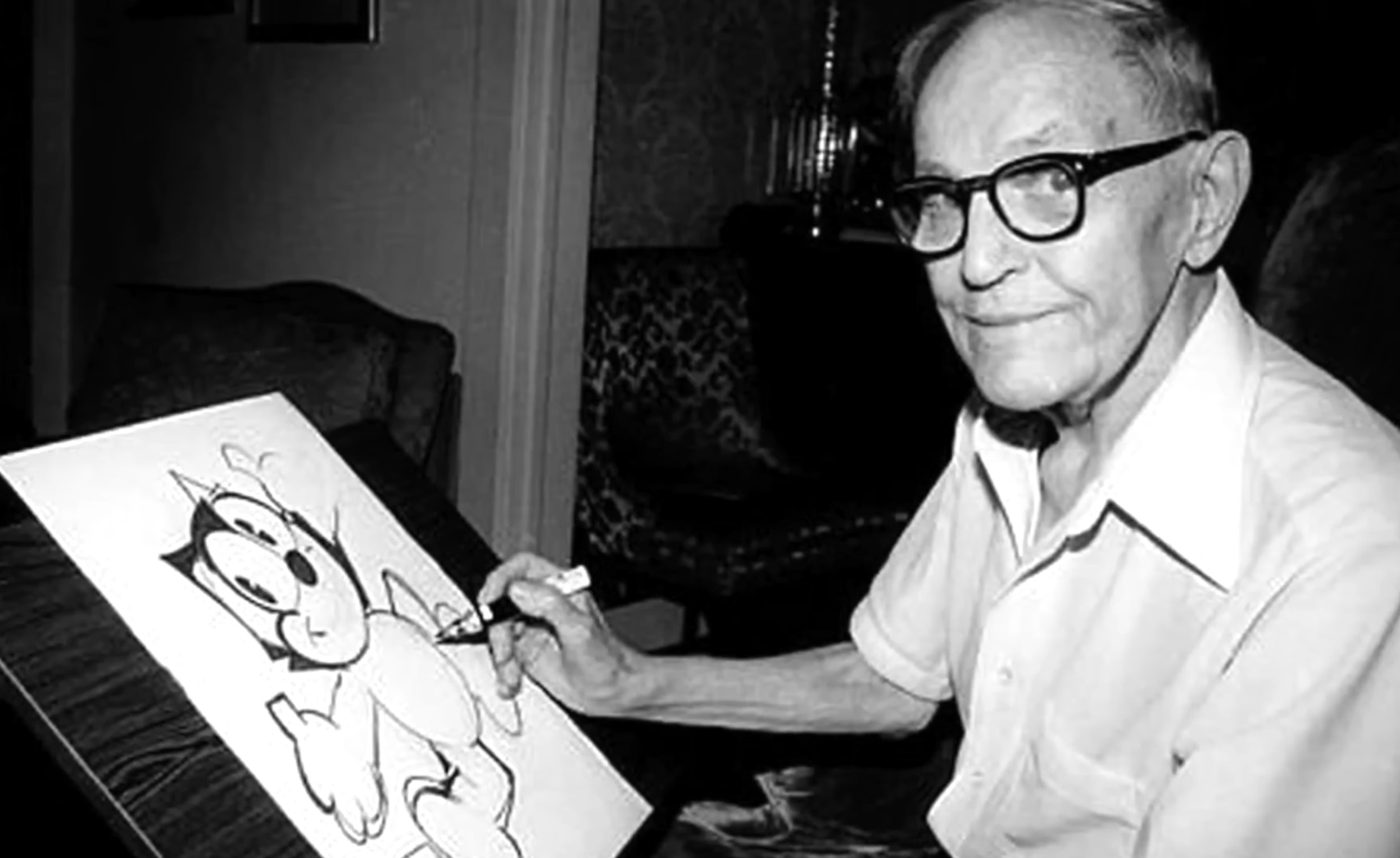
On November 9, 1919, animator Otto Messmer released Feline Follies – a short film about a black cat trying to impress a white cat on a moonlit rooftop.
The cat had no dialogue. No elaborate backstory. Just movement, mischief, and the unshakable confidence of something that refuses to stay down.
He was the first alley cat in animation history.
Not a house cat. Not a pampered pet with a collar and a bowl.
An alley cat.
The archetype that would define a century of urban mythology: resourceful, independent, unkillable, and always grinning at the chaos.
Felix’s signature move was his tail – detachable, multi-purpose, animated like it had its own logic. He’d pull it off and use it as a shovel. A lasso.
A question mark floating above his head when he was confused.
It wasn’t cute. It was practical.
Survival through improvisation. The alley cat playbook.
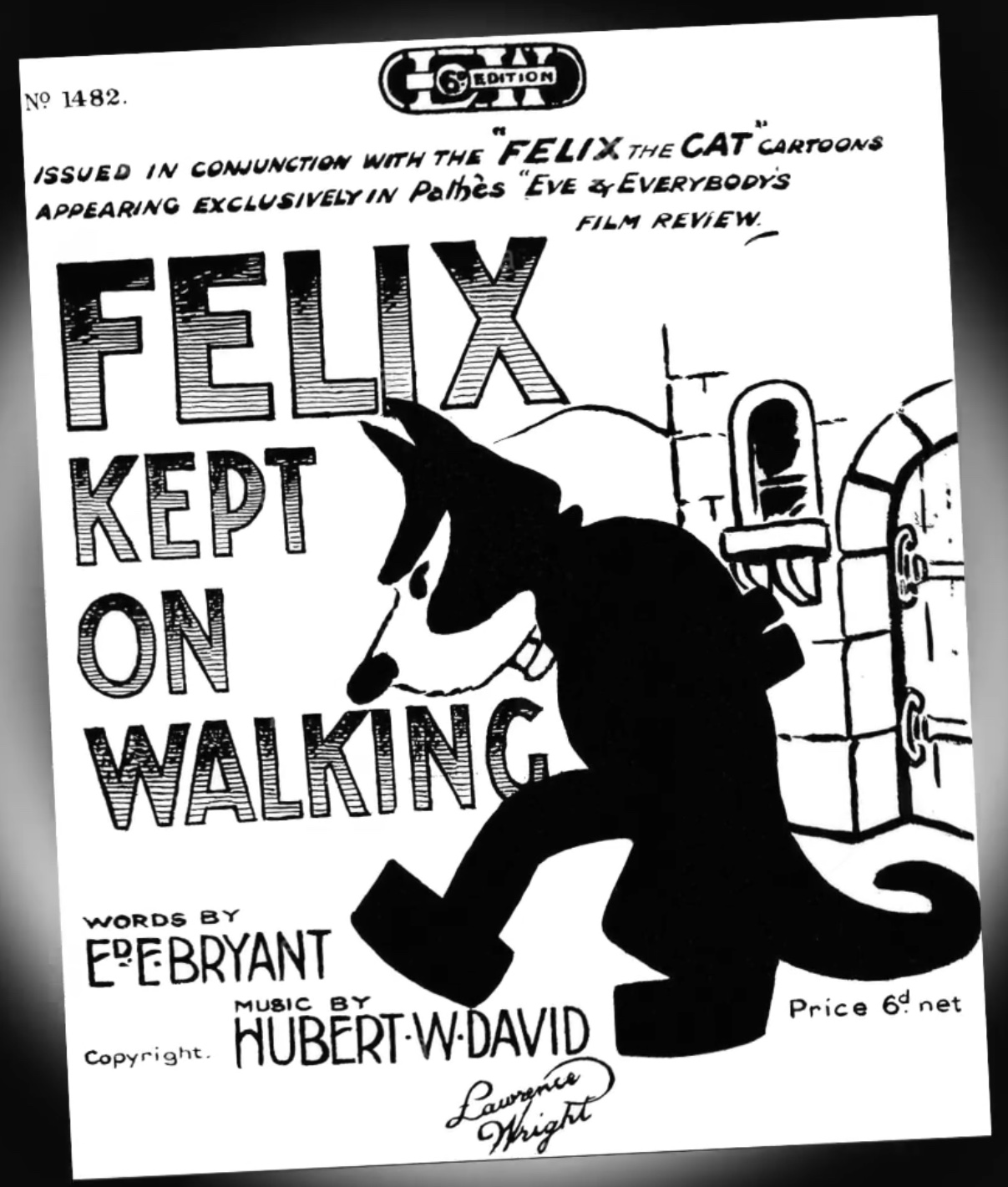
By 1925, Felix the Cat was the biggest media star on the planet. Bigger than Chaplin. Bigger than Buster Keaton. Movie theaters were showing Felix shorts before feature films because audiences demanded it.
He was everywhere: dolls, clocks, cigarette cases, Broadway musicals.
And then, in 1928, sound came to animation.
Felix – designed for silence, for pure visual storytelling – didn’t adapt fast enough.
Disney’s Mickey Mouse did.
Felix faded.
But he didn’t disappear.
─────────
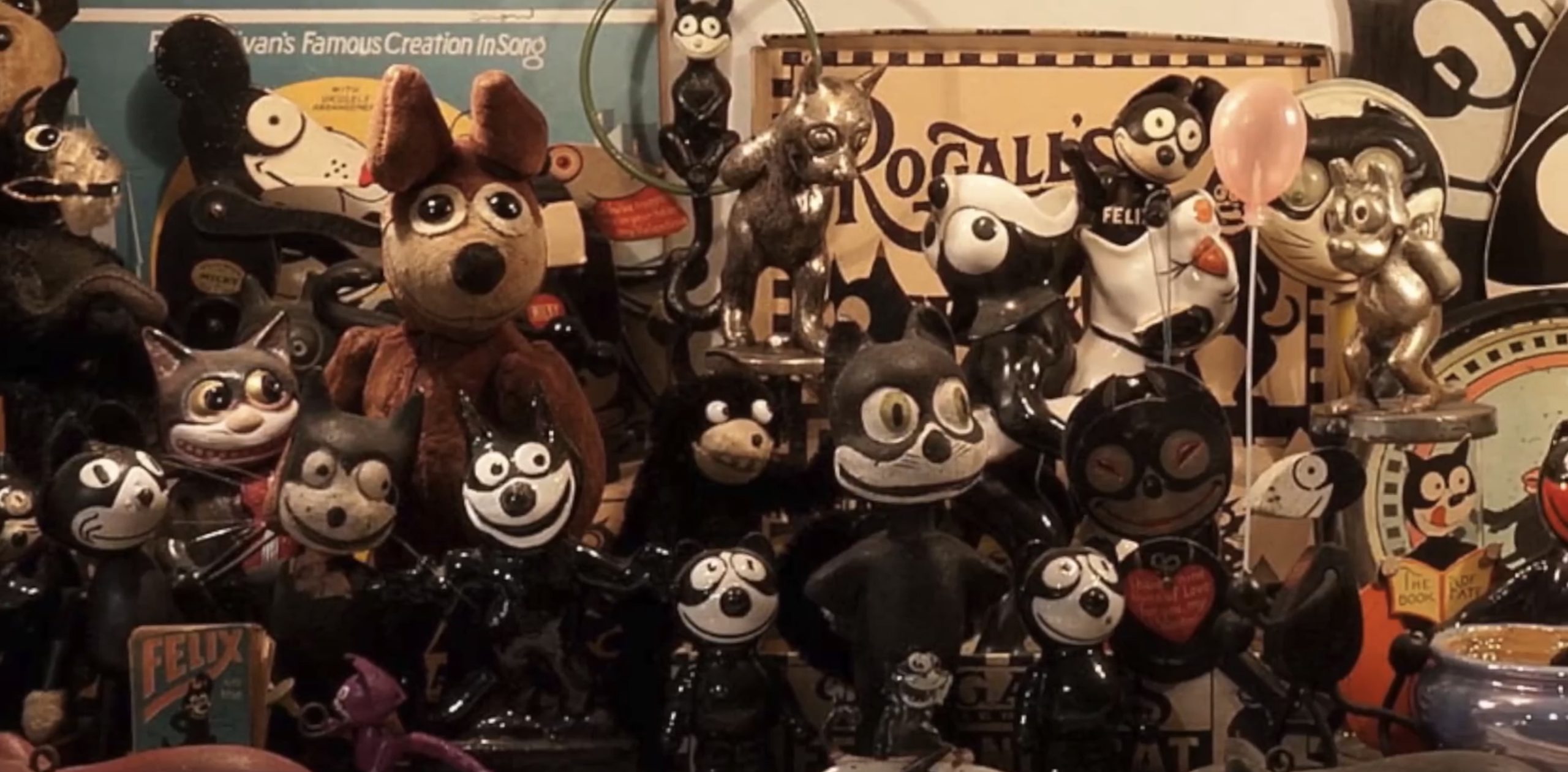
1930s–1940s: THE ALLEY CAT BECOMES A SYMBOL
While Felix lost his Hollywood throne, the alley cat entered American slang.
By the 1930s, “alley cat” meant a certain kind of man: smooth, slightly dangerous, never quite domesticated. The kind who showed up at midnight and left before dawn. Clark Gable in a cheap suit.
In jazz circles, “alley cat” meant something else: a late-night jam session in a back alley or an after-hours club where the real music happened – off the books, outside the rules.
And in 1939, Felix became the mascot of television itself.
When RCA was testing the first TV broadcasts in the United States, they needed an image that could hold up under primitive scanning technology. Something simple. High contrast. Recognizable.
They chose a Felix the Cat doll.
The first image ever broadcast on American television was Felix, spinning on a turntable, grinning at the camera.
The alley cat survived by being useful. Again.
─────────
1940s: THE GANG ARRIVES
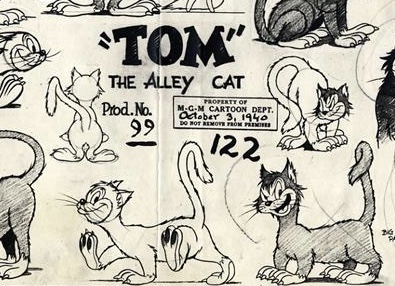
MGM’s Tom & Jerry cartoons introduced a new kind of alley cat: the gang leader.
Tom wasn’t alone. He ran with Butch, Meathead, and Topsy – a crew of street cats with cigars, patched fur, and switchblade energy.
The 1942 short The Bowling Alley-Cat showed Tom recruiting his gang for a night raid. The 1943 short Baby Puss had the gang force-feeding Tom castor oil while he was dressed in diapers – peak chaotic alley brotherhood.
These weren’t cute cats. They were greasers. Toughs. The kind of cats that hung around docks and back alleys, loyal to the pack, suspicious of outsiders.
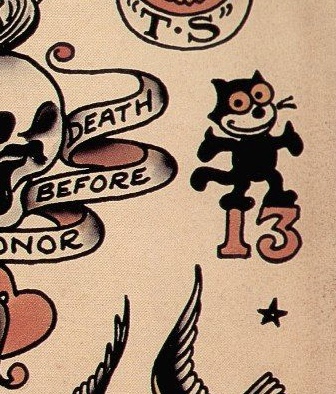
The designs – angular faces, heavy shadows, exaggerated swagger – became visual shorthand for “street.”
Tattoo flash from the 1940s started borrowing that aesthetic. Sailors wanted cats that looked like they’d been in a fight. Cats with scars. Cats with attitude.
The alley cat became ink.
─────────
1950s–1970s: JAZZ, BEATS, AND BOHEMIA
In 1958, Felix returned to television – redesigned with long legs, white gloves, and a laid-back, almost stoner vibe. He wasn’t chasing anything anymore.
He was just cool.
In 1962, Danish pianist Bent Fabric released an instrumental called “The Alley Cat” – a swinging, late-night piano tune that became a global hit.
In 1967, Peggy Lee recorded a vocal version with lyrics about a tomcat who “never comes when you call.”
The alley cat was now synonymous with jazz, freedom, and refusal to settle down.
Then in 1970, Disney’s The Aristocats gave the alley cat its ultimate cinematic moment: Scat Cat and his multicultural jazz band playing on Parisian rooftops, singing “Everybody Wants to Be a Cat.”
The message was clear: the alley cat life – bohemian, improvised, outside the system – was the dream life.
─────────
1980s–2020s: DARK, SEXY, VIRAL
By the 1980s and ’90s, the alley cat archetype split into two directions:
One path went dark and cinematic. Michelle Pfeiffer’s Catwoman in Batman Returns (1992) literally lived in alleys, stitched together her own costume, and purred, “Life’s a bitch, now so am I.”
The other path went underground. Image Comics launched Alley Cat in 1999 – a demon-possessed vigilante who prowled rooftops in latex. Gritty. Violent. Unapologetically nocturnal.
Then the internet arrived.
Simon’s Cat (2008–2019) brought the cat back to pure visual comedy – black-and-white mischief with no dialogue, just like Felix in 1919.
And in 2023, TikTok made “Alley Cat” viral again. Gen Z started using Peggy Lee’s 1967 song as the soundtrack for night-out videos – prowling streets, dodging authority, living outside the script.
As of 2025, #AlleyCat has over 1.2 billion views.
The stray never left. He just adapts.
─────────
THE BLOODLINE
1917 → tailless brawler with a permanent limp
1919 → nameless stray with a detachable tail
1940s → gang leader with a cigar
1970s → jazz musician on a rooftop
1990s → vigilante in an alley
2020s → viral symbol of nocturnal freedom
One unbroken bloodline.
One hundred and six years of black cats who never bow, never stay, always land on their feet, and always come back grinning.
─────────
WHY IT MATTERS
Felix the Cat survived because someone drew him correctly in 1919.
Not because he was trendy.
Not because he had good PR.
Because the lines were clean, the movement was sharp, and the character had something real underneath the grin.
The same reason a tattoo survives.
The alley cat doesn’t ask for approval. He doesn’t wait for permission.
He just shows up, does the work, and walks.
That’s the standard.
That’s why the Alley Cat Tattoo exists.
[END]
Alley Cat Tattoo – Bucharest, 2025
